Product history · Engineering
Lessons from Building Omniscope Across Multiple Technology Cycles
What survived desktop, web, cloud, no-code and AI—and what I would do differently after fifteen years building Omniscope with the Visokio team.
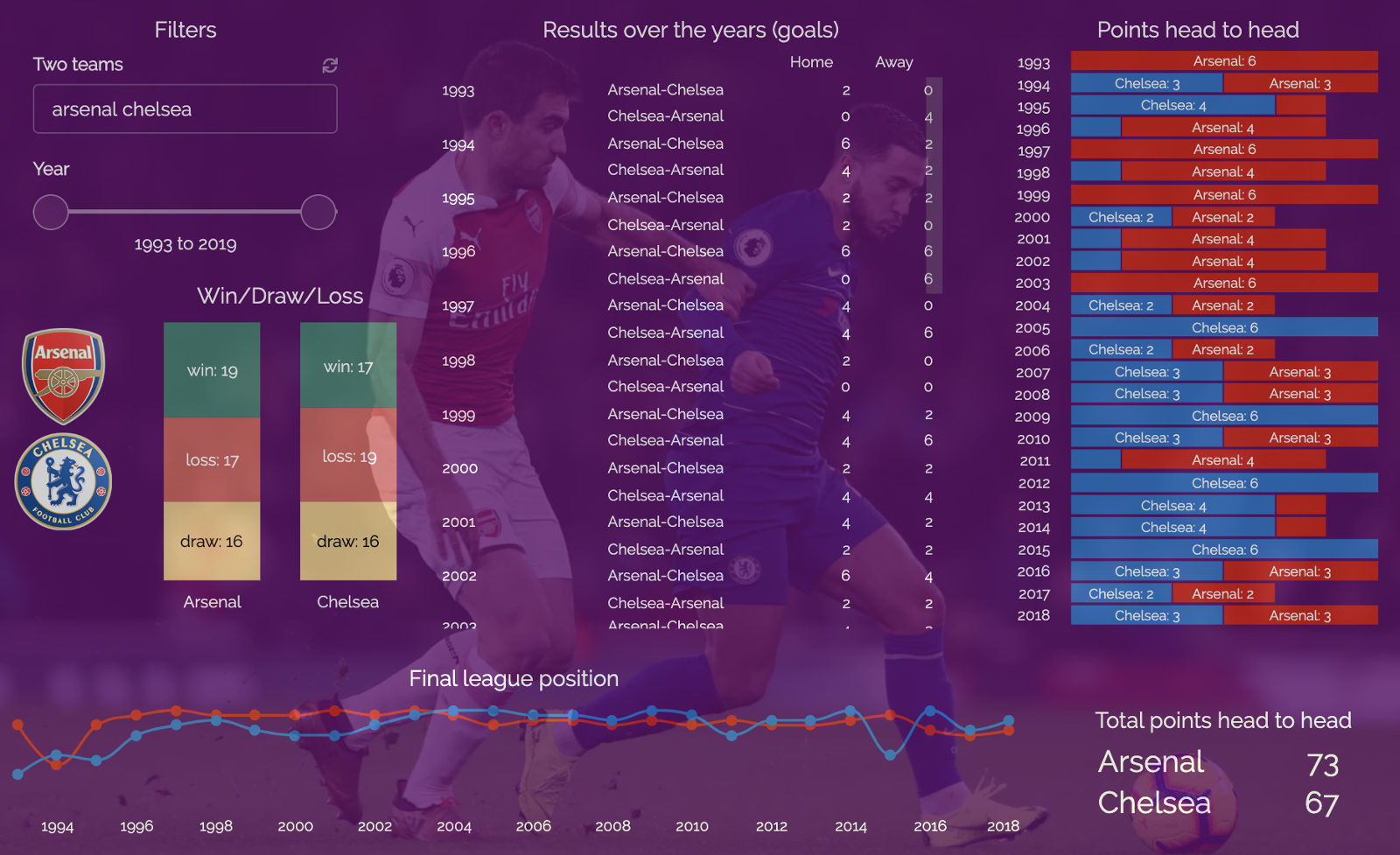
Visokio was founded in 2002 and Omniscope 1.0 arrived in 2005. By the time we released the rebuilt web generation in 2018, I opened my LinkedIn post with: “Finally, after 3 years of hard work, the new Omniscope is out.”
My thoughts that day were with the past and present colleagues who had built it. I also wrote that I would never stop being a developer because creating software makes me feel “invincible”. That probably says more about the product history than a neat technology timeline does.
Desktop software gave way to the web. “Big data” changed the way everybody described data. Cloud and SaaS became the default delivery model, no-code opened building to more people, and AI can now operate parts of the stack. We adopted capabilities from every cycle, sometimes rebuilt a great deal, spent longer than planned on releases and often struggled to explain a product that crossed several categories. The lessons came from that work, including the parts we did not predict.
1. Keep the product principle, not the implementation
The first Omniscope brought multiple coordinated visualisations into one desktop environment. Selecting records in one view changed the others, so a person could investigate a complex dataset without turning every question into a separate charting exercise.
Around 2015, the original implementation was preventing us from carrying that idea much further. We began a multi-year rebuild for the web and publicly released it on 12 November 2018, after three years of work. The new workflow, report architecture, server deployment and extension model replaced much more than the interface; they gave us a foundation on which a different class of product could grow.
I would not recommend a rewrite as a product ritual. It is expensive, dangerous and easy to underestimate. In our case the technical substrate was blocking the way we wanted people to build, publish and operate the product, which made the risk worth taking.
2. Operational capability arrives one unglamorous layer at a time
Product histories naturally remember the visual features, but much of the work after 2018 was less photogenic. In 2019.3 we added central parameters, JSON and XML handling, localisation and scheduler-driven parameter changes. In 2020.2, Working Copies separated live work from editing while the Workflow REST API, report editing, multi-tenant enhancements, retries and structured logs made projects easier to operate.
The next releases kept filling in the system around the analysis. 2021.2 brought project templates, workflow grouping and isolated Python/R custom blocks. 2022.1 added reusable macros, mobile layouts, custom-block libraries and more file and cloud formats. By 2024.1, Omniscope had revision history, background validation, the Automation API, Data Profiler and early AI blocks.
Then the visible features became exciting again. 2025.1 introduced Report Ninja, Instant Dashboard, Data Q&A, local or cloud models and schema controls. In 2026, Insight Explorer and agent capabilities arrived with a stronger verification path built on the scheduling, APIs and validation already there. None of those releases on its own turned a prototype into a platform. People could depend on the product because parameters, versioning, publishing, logs, permissions and release management had accumulated underneath.
3. A visual core needs deliberate escape hatches
One of my posts in 2021 began with a practical question: how do you run a Python or R script without harming the machine around it? In Omniscope, you can place the script in a Custom Block and run it inside an isolated Docker container. At the time my less formal description was “paste your scripts… and boom!”
That extension did not replace the visual workflow. It gave a specialist algorithm a bounded place inside it. Omniscope also added custom HTML and JavaScript views, reusable macros, connectors and APIs, while common preparation and reporting work remained visible to people who did not need to read the code.
The shared workflow is still the map. Extension boundaries are added when a real requirement needs them. The next article covers where those boundaries belong and what testing and ownership they need.
4. Technology cycles are real; their marketing generalisations are not
The big-data cycle brought genuine distributed systems and made previously impossible workloads practical. It also encouraged people to approach every data problem as if it were enormous, when most everyday datasets still fit on a modern machine and the hard part is understanding their meaning.
I was reminded of that in 2025 when Azure and AWS both had outages. For years we had been told that laptops were too small, everything had to move to the cloud and, more recently, a model could answer the problem for us. Yet I could still open a laptop without internet and work privately—even on a plane, surrounded by real clouds. Cloud and SaaS are convenient, and we use online services ourselves, but keeping local and on-premises deployment gave customers a choice when privacy, connectivity or control required it.
No-code similarly gave more people the ability to build, while the security and operational work remained real. AI can now interpret intent, construct workflows and write substantial software, but the team shipping a production change still owns the consequences. We try the new capability against actual work and keep the parts that hold up.
5. Independence creates product options and communication problems
Bootstrapping Visokio gave us the freedom to keep local and on-premises deployment while much of the market moved towards vendor clouds. A customer could own the complete data path, and we could continue developing one integrated product instead of splitting every capability into a separately funded category.
Direct support has been part of that independence. Customers work with people who can change the product, whether they need application support, technical help or data-solutions engineering. That contact solves the immediate problem and can also shape the next improvement in Omniscope.
It also made Omniscope harder to describe. In February 2026, a customer and a prospect independently told me the same thing on the same day: the website had not made the product clear, but after seeing it they wondered why everybody was not already using it. That hurt a bit after twenty years of building with obsession and care.
“A tool made of tools” makes sense once a file has become a scheduled data application, a workflow has become a customer-facing tool, an AI question has produced a report somebody can inspect, or a public measurement has triggered a contextual alert. We needed to show those complete stories much earlier and more consistently.
6. Release discipline is a product feature
We call our stable milestone releases “Rock” builds. When the 2026 build finally shipped, my first reaction was: “Sorry, this took a while. But man… we got there!” The label marks the end of a development phase after extended automated and manual testing. The release notes still advise teams to test their own setup before changing a production system, because our testing cannot reproduce every customer deployment.
A release process needs:
- known versions;
- automated and manual coverage;
- migration behaviour;
- backwards compatibility where promised;
- documented breaking changes;
- staging;
- rollback;
- honest limitations.
New AI capabilities increase the combinations we need to test: model, runtime, tool interface, data permissions and output parsers. A result can look convincing while one of those layers is wrong, so the old release discipline becomes more useful rather than less.
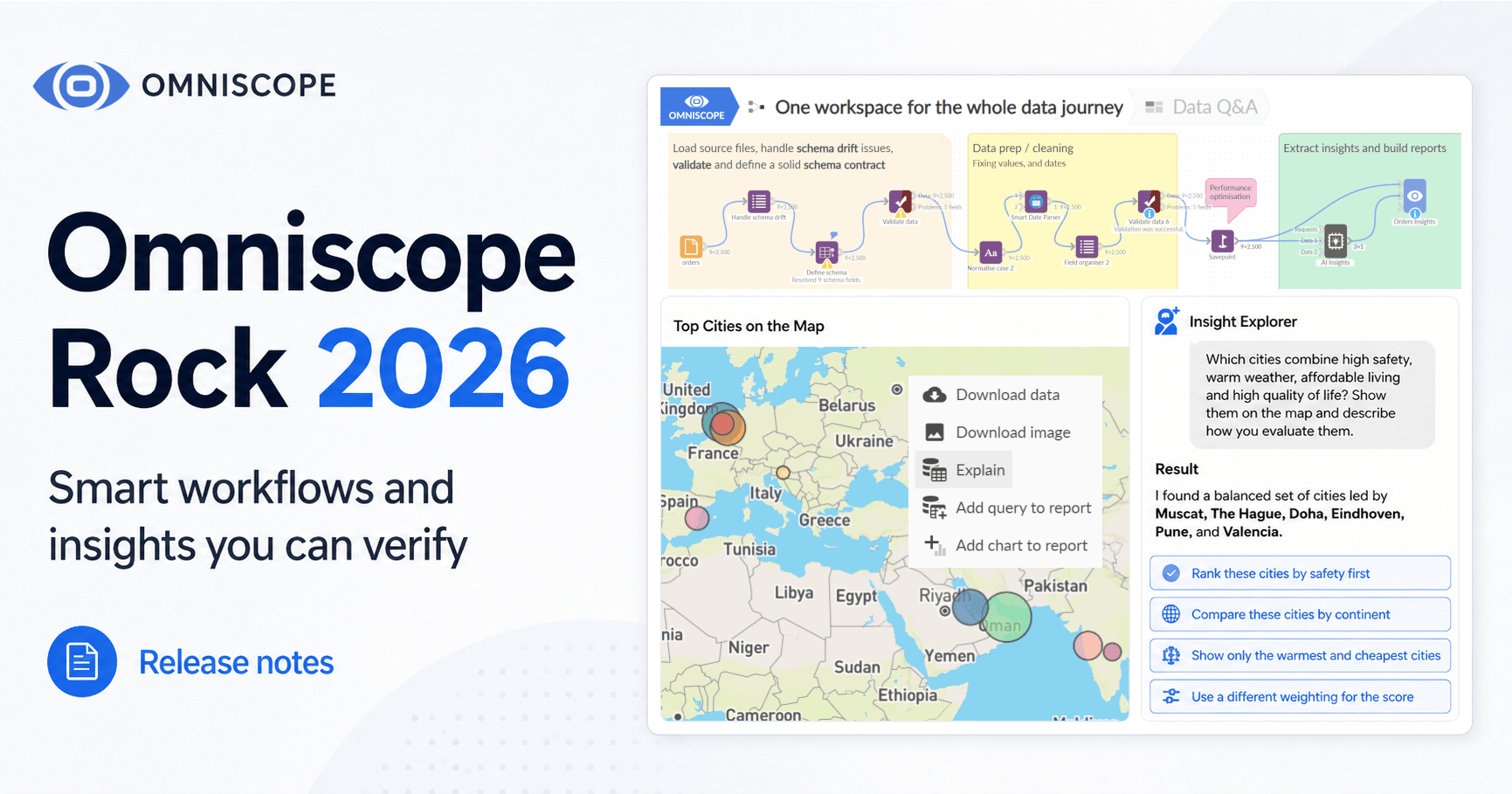
The exciting demo still needs a known version and a route back when the upgrade behaves differently on real data.
7. AI rewards accumulated capability
An AI agent becomes useful when it has useful tools to operate. In Omniscope we did not place a magic brain behind the interface. We described the existing transforms, joins, reports, workflows and integrations to the model, constrained how it could call them, and let Omniscope execute the resulting plan.
That model can now construct a workflow from existing blocks, build a report through the real designer and help explain a calculation whose source inputs remain visible. It can use a local or cloud provider because model choice sits outside the durable analytical artefact. Report Ninja, Data Q&A and Insight Explorer feel new to the user, but they operate capabilities accumulated over many releases.
What I would do again
Looking back, I would still keep the full path from source to explanation visible and let people begin visually, with an explicit route into code when a specialist requirement appears. I would keep local and on-premises operation as first-class choices, and keep parameters, APIs and automation inside the product rather than treating them as later integrations.
I would also continue investing in operational controls that are difficult to demonstrate, keep model and provider choice reversible, and stay close enough to the engineering to understand the trade-offs. I would change how early and consistently we communicated the concrete use cases. A capable product still has to show somebody the first useful job it can do for them.
The continuing thread
The product has moved from desktop coordinated visualisation to a web-based environment for complete data applications and verifiable AI. The full Omniscope timeline records the milestones.
The labels will continue to change. I still recognise the work: take data in the form it actually exists, make the transformations visible, let people investigate and build, and turn the useful result into something others can operate. We want customers to keep control of the data and logic while using new models where they genuinely help.
Fifteen years after joining Visokio, I am still involved in the engineering, still experimenting and still trying to explain the thing we have built. Apparently I meant it when I said I would never stop being a developer.